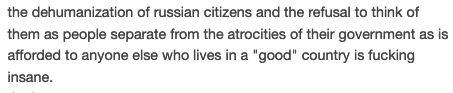
*person who’s grown up online their whole life & regularly uses the internet to learn indepth information about their favorite TV shows* yeah they just don’t teach us anything about countries outside the US >_<
I don’t even care that this video is an advertisement. The kind of spirit the man in this story portrays is the kind of spirit which we should all strive for. 💚
Being a good person just for the sake of it. Imagine that.
This has always been when of my all time favorite commercials. And I never fail to cry.
“Saruman believes it is only great power that can hold evil in check, but that is not what I have found. It is the small everyday deeds of ordinary folk that keep the darkness at bay. Small acts of kindness and love.”
– Gandalf, The Hobbit: An Unexpected Journey (2012)
Bro when the kid turned up in her new school uniform I about started crying bro
i don’t even care that that’s almost certainly a terrible way to water plants, it got me square in the feels by the end. I would watch an anime with this guy as the main character.
As my answer always is when I am asked this, if you’re asking someone else what you should think about true names, you’re not going to find anything worth finding.
And also like the idea of a “true” name is inherently poisoned by fantasy novels. The most basic and boring answer really is just what name you would answer to and consider your name. Like if my name were “Billy” then for magical purposes my true name is “Billy”.
The reason it was/is a big deal to not use your true name is based around lore and belief that something which knows your name has power over you–power to summon, to bind, to enchant, to curse, to call down upon. You can use a name for a taglock, a poppet, or a focus; if you’re working with spirits, knowing something’s name, of course, is how you summon it. If you’re working with fae in particular, by giving them your name, you give them your self and identity, turning you into nothing but a hollow shell to be filled up with orders.
But the reality is that true names are in practice probably just significantly more boring than anyone ever wants to think about, but they are a very valuable thought experiment to encourage you to examine yourself and who and what you are.
You run a late-night radio show where people call in to anonymously talk about their biggest regrets. One slow night, someone calls in, and as they talk, you slowly realize that the caller is none other than Lucifer himself.
I don’t like
talking to people. Which is a strange thing for a talk-show host to say, but
it’s true.
The thing
is, I don’t like talking to people in person. Voices on the line are…
different. They can’t see me. I can’t see them. It doesn’t make me anxious the
way face-to-face does. So I’ve been working the midnight regret-line for years,
and rarely interact with anyone outside it, which makes me happy. People
sometimes call just to get things off their chest, and it helps them if I
listen. Most of them, though, want advice on how to handle their regret.
The secret
to giving good advice is pretty simple, and I worked it out early on. There are
three keys to it. I have two staple pieces of advice, which I re-dress in
language appropriate to each situation. The first one is ‘the only actions you
can control are your own’. Whether I’m explaining that you can’t stop someone
from divorcing you, why your kid hates you now, or why you can’t love someone
into getting over an addiction, it all comes down to the same thing. You can’t
control other people. Your responsibility is for your own actions and choices.
The second
one is for problem solving. Apply the scientific method, basically – that’s the
best way I know to solve problems, anyway. Most people don’t know it, so I
explain it in terms they can understand, and coach them through a couple of applications.
The third
thing is to just listen. Really listen. People want to be heard, and I’m good
at that. It’s why I’m good at weeding out the fakes, and why people usually end
the call feeling better.
Some nights
are quiet, and I play music, or talk. I tell them, often, that anyone can call.
It’s okay if it’s not something big, or if it is. If it’s criminal, the
recording will be passed on to the relevant authorities, but we won’t do more
than that. Sometimes kids call, or old people. Most people don’t listen to
them, but I do. I like to think I make them feel safe.
This one
night started like any other. I talked an old woman through rebuilding her
relationship with her daughter, and a young man through a bad breakup. Then
nobody called for a while, so I played some Vivaldi. Then…
Then the
voice came on the line. A deep and very beautiful voice… it was like talking to
Idris Elba or Christopher Lee, but with a hint of melodious accent that I
couldn’t place. “I suppose,” it said, and it sounded so sad my throat tightened
in sympathy, “that my greatest regret is the breach with my father. I was…
disowned. Cast out. I never meant for it to go that far. I didn’t want to never
see him again.”
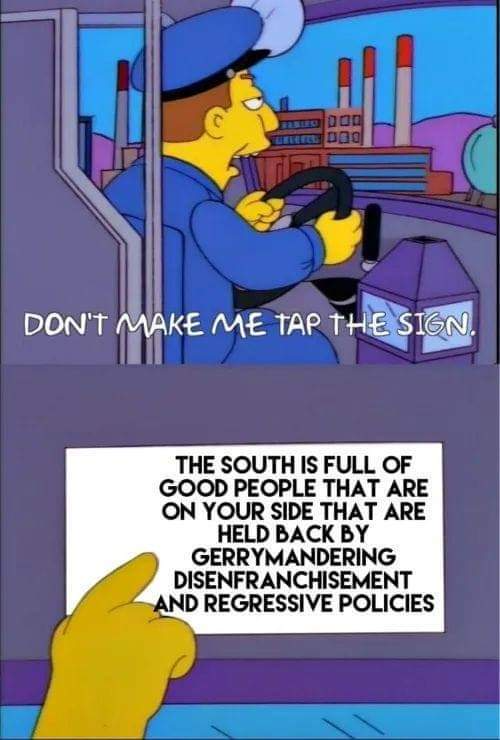
I REALLY wanna know what “good” countries these are, its certainly not referring to anyone in the US South, because people have conflated them with their government so many times i gotta keep this meme around:

ALT