Category: Uncategorized

softgaycontent:

biblioprincessdalian:

Applying for jobs is a hell designed specifically to torment autistic people. Here is a well-paying task which you know in your heart and soul if they just gave you a desk and left you alone and allowed you to do it you would sit there and be more focused and enthusiastic and excellent at it than anyone else in the building. However, before they allow you to perform the task, you must pass through 3-4 opaque social crucibles where you must wear uncomfortable clothes and make eye contact while everyone expects you to lie, but not too much (no one is ever clear exactly how much lying is expected, “over” honesty is however penalized). You are being judged almost entirely on how well you understand these very specific and unclear rules that no one has explained. None of this has anything to do with your ability to perform the desired task.

It is hell! I want to acknowledge that the original point of the post is NOT fixed by my providing solutions (the way jobs are filled makes no sense), but also I want to leave some notes for folks struggling with these unspoken rules. 

Some brief notes on the correct kinds of “LYING”:

  • Always use “I” expressions, instead of “we”:
    1. eg “I created a solution to a recurring problem by doing [x].”, even if it was really you and two others in a group
    2. If you LED the group (or did project-management), you can say, “I led a team to create a solution to a recurring problem by doing [x].”
    3. This is because employers like to know that YOU can do, and they also value team-leadership. If you say “we”, they may stop you and ask what You did specifically. You can avoid this by just saying “I”.
  • Someone asks if you have experience in a program (like excel):
    1. If you feel confident using it:  “Yes, I am very proficient.”
    2. If you have used it a few times, and could at least google what to do next: “Yes, I have good experience.”
    3. If you don’t have any experience: “I have used it before. I generally pick up programs very fast, and I’m a quick learner.”
  • Mistakes (some interviewers may ask about a time you made a mistake, or a weakness of yours):
    1. Good answers are those with solutions.
    2. Bad answer examples:  “Sometimes I don’t catch mistakes before sending things.”  OR  “I don’t like working with other people”
    3. Good answer examples:  “I had a problem catching typos, so I implemented steps that force me to check my work.”  OR  “I prefer to do things on my own so I know it’s done right, but I’m working on trusting my teammates to take on pieces as well.”
  • Someone asks if you’ve ever led a team / managed a project:

    1. Try to say YES to this question (even if it is a lie)
    2. If you have, say yes, and say how many people were on the team. 
    3. If you haven’t, but you played a large role in a group of people, say yes, and talk about your primary role on the team. 
    4. If you haven’t, but you worked solo on something that needed input from other people, say yes, and say what the project was about. 

    Additional:

  • Misc Rules
    1. You can ask people to repeat interview questions
    2. You can write down interview questions while they’re asking (write the basics of the question down for yourself, like the top things you have to answer). People will wait for you to finish writing, you don’t have to answer Immediately.
    3. Try to keep your answer to questions somewhere between 30 seconds to 1 minute and 30 seconds. You don’t have to time it, but if you find that your answers are taking 3 minutes, you might lose interest.
  • Have a list of projects / bragging points to talk about in advance
    1. Try to make sure they at least answer the core question asked, don’t just bring up a completely unrelated topic
    2. Example: if you are really excited to talk about a program you wrote, and someone asks about balancing projects, you can say you are good at AUTOMATION, and an example is this program you wrote
  • “Do you have any questions for us?” (A question asked at the end of most interviews.)
    1. “What has been your favorite part of working at [company]?”
    2. “What’s been your favorite project to work on?”
    3. People like talking about themselves
  • Thank you emails
    1. Some employers care if you send them a thank you “letter” (email). Sometime by the end of the day (you can do it right after the interview if you think you’ll forget), send a thank you email like this (you can look up other templates, or ask a friend for help):
    2. Subject Line:  Thank You
    3. “Hi [interviewer name],
      It was great speaking with you. Hearing more about the role, as well as what you said about [their answer to a question you asked them] has made me even more excited for this opportunity.
      Thank you for your time today,
      [Your Name]

    Good luck!!

    Having spent the last two decades in an office job here’s the trick with interviews: While some familiarity with the skills listed on the job requisition is nice, that’s really just the bare minimum. A lot of office work is force multiplication: You do a little bit effort so a lot of other people can also do their jobs.

    A lot of that effort is just talking, making sure people know where they can get docs/how they can do the things they are doing/why we decided to do things this way. The Job Interview is REALLY for that. That’s why people are always talking about a “good fit” in job interviews.

    But you might ask: “Tev if I’m doing this, won’t that mean I’m not getting any of my real, assigned work done!? And yes that’s true, there are WHOLE weeks where I don’t get any thing that I wanted to do finished, but if I only get 70% progress and I help 10 other people each get 10% progress, things are still moving forward.

    That’s the point of a good job interview. Technical skill on as specific thing can be taught far easier than trying to teach someone the correct way to interact with other people in that particular office. You might be absolutely brilliant at doing something but you’re social skills are such a mismatch for the office that it ends up being not an enjoyable time for anyone.

    For example: a previous co-worker of mine was brilliant technically and had network and systems architecture skills that could run circles around most people I know.  The problem, however, was their personalty meant that they’d NEVER fucking explain themselves after making a decision. He’d decide something at that would be final. Sometimes, I as the person who understood that people need reasons, could actually bridge this gap but that also meant I was having to play Telephone instead of adults having conversations with each other. For other things, they just would not at all get done if he didn’t like it. After he was let go we spent years cleaning up both the technical and social stuff in their wake.

    The interview more looks at your personality than what you can do. This also works in reverse.
    kelpforestdwellers:

    inthewayoutthere:

    robotslenderman:

    onemillionwordsofcrap:

    inthewayoutthere:

    adhd is so embarrassing ur basically like “I have to have fun right the fuck now or I’m throwing myself off the roof” 90% of the time and you also have very little control over this

    This was the single most important thing for me to start understanding re: my undiagnosed ADHD, and it’s the thing no one tells you except other ADHD sufferers. My brain’s reward system is so broken that boredom rapidly becomes indistinguishable from a depressive episode. There’s no healthy, normal ability to experience something as simply being a little dull–as soon as my brain isn’t getting regular hits of stimulation, I start clawing at the walls. This is what makes working in a structured environment and initiating tasks so difficult for me, not malice or other character flaws.

    boredom rapidly becomes indistinguishable from a depressive episode

    Oh my god. Thank you for this. This explains it PERFECTLY. Growing up neurotypical people were acting like doing something boring was a minor annoyance and I couldn’t grasp that because it was a Whole Fucking Thing for me that included physical pain in my chest.

    Oh yeah, it’s physiological. For an easier way to understand, the way that autistic people experience discomfort similar to pain from too much stimulation, people with adhd experience discomfort similar to pain from too little stimulation. Especially if during this understimulation we’re expected to still perform uninteresting Important Tasks™️

    It’s like when someone says driving relaxes them, or something else sort of insane, and everyone else thinks that’s a crazy way to relax. Relaxing doesn’t mean doing nothing, it means getting to a comfortable level of stimulation. So when you don’t have that level and you’re trying to do something important, the stress of being unable to relax compounds onto the normal stress of the task.

    (If you have autism and adhd like me, the window of comfortable stimulation is so small that hardly anything gets done)

    fyi autistic people can also have problems with both over and understimulation. as can everyone, with varying thresholds

    tevruden:Dante ate a weird rock

    tevruden:

    Dante ate a weird rock

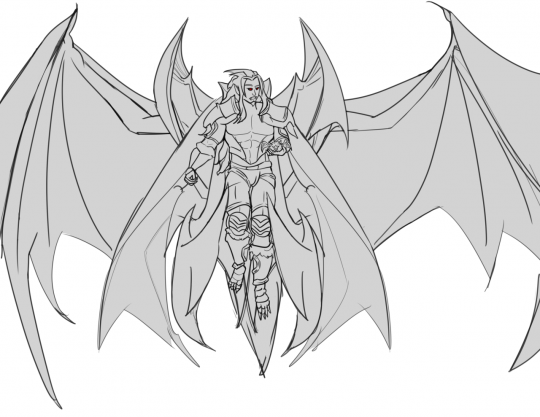
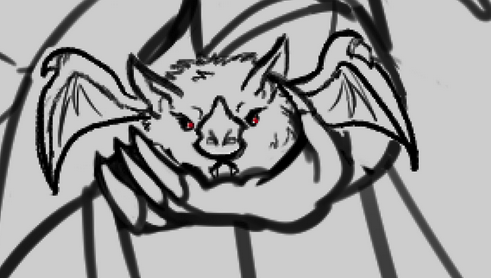
    tevruden:Sometimes you’re a vampire ancient enough to give civilization a run for its money and you have to channel that to– politely– remind someone that your husband asked for no pickles OH i almost forgot! Important:

    tevruden:

    Sometimes you’re a vampire ancient enough to give civilization a run for
    its money and you have to channel that to– politely– remind someone
    that your husband asked for no pickles

    OH i almost forgot!

    Important:

    image

    tevruden:Sometimes you’re a vampire ancient enough to give civilization a run for its money and you have to channel that to– politely– remind someone that your husband asked for no pickles

    tevruden:

    Sometimes you’re a vampire ancient enough to give civilization a run for
    its money and you have to channel that to– politely– remind someone
    that your husband asked for no pickles

    lovedthestars-toofondly:

    lovedthestars-toofondly:

    underdiscussed benefit of auditory processing issues is that I’m basically immune to catcalling because I fully. do not understand a single word of what people are saying. half the time I barely realise it’s me they’re talking to because it‘s not like I can figure it out based on content and context clues. there’s just Some Guys Yelling on the other side of the street, and it barely occurs to me to feel addressed because I am, at any given time, too busy thinking about the menacing duality of rhododendrons

    #great point but would you mind elaborating on the menacing duality of rhododendrons real quick  @saintgulik I would not mind elaborating AT ALL, but I absolutely cannot promise it’ll be quick

    [content note for discussions of imperialism, colonialism, and 19th century racist attitudes after “attain a hi-vis vest and a chainsaw and get to work”]

    so basically this started with me reading Daphne du Maurier’s Rebecca for the first time when I was in my third year of uni, and being deeply fascinated by all the plant imagery to the point where I wrote half an essay analysing certain aspects of it

    this was also a time when I was for the first time developing a deeper environmental consciousness and started paying more attention to the plants and nature around me

    and the thing is, I grew up in an area with very alkaline soil, which rhododendrons do not grow in at all, so I’d never actually seen any until moving out to go to university (in a place with much more acidic soil)

    so I’m reading this book about a deeply insecure young woman feeling menaced by the plants that still attest to the presence and influence of her predecessor in every part of the house and garden, while also taking spring walks marvelling at shrubs covered in more and bigger and more colourful blossoms than I have ever seen on a single plant in my entire life, they come in pink and purple and crimson and orange and yellow and venous red, they come thick and solid and large as my palm and they come in translucid white that seems to melt as soon as the still-cold rain touches them, they grow in the beds around university buildings and form their own grove in the botanic garden and greet me on my walks through the neighbourhood and are threatening to take over the entire stretch of land on the other side of the river. they are an aggressive explosion of colour and life after a long winter with six daily hours of watery sunlight, in a city where every building is grey.

    you could say they left an impression.

    but I’m also reading about how they’re poisonous and honey produced from their pollen is known as “mad honey.” I’m reading about how they’re highly invasive, how their roots will spread out and rise up to form entire new shrubs, how they’ll take over whole gardens and estates, how under their dense leaf cover everything else dies because the other plants don’t get enough light, how it can take years of cutting back the plants again and again before the sprawling roots are finally starved enough to really die. I’m reading about how rhododendron thickets will be eerily quiet, empty, because animals find no food there.

    the Happy Valley from Rebecca turns into a death zone in my mind.

    basically to me rhododendrons are an object of ongoing interest and aesthetic pleasure and a source of marvel, but also I can never look at them without being haunted by the thought of their disastrous ecological impact and feeling the vague urge to attain a hi-vis vest and a chainsaw and get to work

    so those are the thoughts on the menacing duality proper, but following
    from that I have some further (not yet very cohesive) thoughs on rhododendrons and the British Empire, because the thing is –

    the thing is, the native range of rhododendrons fucking huge, but a lot of
    the fancy
    ornamental ones are originally from East and Southeast Asia and
    especially the Himalaya region, and it kind of makes you wonder, where did these approximately fifty different species of rhododendron in these English gardens come from and who brought them here?

    the thing is, Rebecca is, though not a direct retelling, very much in dialogue with and commenting on Jane Eyre, a book which infamously confines its “madwoman” to the literal (and now proverbial) attic because she’s a Creole woman who has been ““corrupted”“ by foreign influences in the colonised Caribbean, and is no longer seen as white or “civilised” enough to make an appropriate spouse for the rich, white, English love interest.

    the thing is, the titular Rebecca is the equivalent of Antoinette-Bertha Cosway-Mason-Rochester, the haunting, bothersome, difficult to control spectre from the colonies who gets in the way of the white English couple’s perfect happiness. the thing is, Rebecca is persistently associated with rhododendrons, which wind their way into everything and every place, and are nearly impossible to contain

    the thing is, when you go out brutally subjugating and exploiting a quarter of the world, you inevitably end up interacting with a lot of different cultures, and no matter how much you keep preaching the superiority of your own, those cultures are going to affect you. fear of incursion, of the dominant (white, British, imperialist) culture being changed, diluted, weakened by influences from colonised cultures, develops as the British Empire expands. and then you get people arguing that, actually, all of this brutal slaughter and colonising and violence is also making Britain and British people worse (wow, what a surprise). and you also get people in Aotearoa New Zealand growing the same flowers that are fashionable in England, and putting them in blocks of ice to be shipped to Europe (which would have taken MONTHS) and judged in a flower show, to demonstrate how successfully they have been “civilising” this part of the world. and basically I have a tangled mess of thoughts and associations in my head about what Rebecca and English gardening and colonialism have to do with each other, and maybe one day I’ll manage to unravel it enough to write it into an actual thesis